

When you stood up your platform team, you probably spent more time on the org chart than on what to name it. Reporting lines, headcount, scope of the first charter, those felt like the real decisions. The name was administrative. Something to put in Slack and the directory and forget about.
That was the most consequential decision you made.
The name you give a platform team isn't just branding. It's a scope declaration. It tells the rest of the company what you own, what you don't, and which rooms you get invited into. It sets the upper bound on what you’ll ever be invited to work on.
The fix is small enough that most leaders don't believe in it until they've seen a peer team try it.
Naming creates invisible boundaries
When leadership stands up a platform team, the name happens fast. Someone proposes it in a Notion doc, someone else nods, and within a week it's on a Slack channel and a Jira project. Two years later, that name is still doing work. It's still telling the rest of the org what you do, what you don't, and where to send the problems that don't fit anywhere else.
Names that describe mechanism (CI/CD, Build, Release, Infrastructure) lock you into a layer of the stack. Names that describe identity or outcome (Developer Platform, Engineering Platform, Developer Experience) leave room to grow.
The "CI/CD Platform" team runs CI/CD. Full stop. When the front-end org starts struggling with developer experience, like slow local builds, inconsistent component libraries, or limited shared tooling, most people don’t think to call the CI/CD Platform team. Why would they? It's not in the name.
Meanwhile, that team almost certainly has the skills to help. They understand build systems, caching, developer ergonomics, the long tail of small frictions that compound into a slow org. But they don't get the call. The name didn't invite them.
This is what most engineering leaders miss when they're naming a team. They think they're describing capability. They're actually drawing a fence.
Org charts are political documents
The chain reaction looks like this. Name shapes charter. Charter shapes budget. Budget shapes roadmap. Roadmap shapes influence. Skip the middle steps and you can usually predict, just from the name, whether a team will be invited to the strategy conversation or whether they'll be cc'd on the rollout email after the fact.
Engineering leaders often don't like to think about this because it feels political. It is political. Every box on the org chart has a scope ceiling: the upper bound on what the team can credibly own, set not by capability but by label. The CI/CD Platform team can be staffed with the best engineers in the company and still not get the service catalog work, because that's not what CI/CD teams do.
Try the thought experiment yourself. Imagine your team pitching golden-path templates for frontend apps. Now read your team's name out loud and ask whether anyone outside your group would assume you should own that.
How The New York Times flipped the script
The clearest example we've seen play out is at The New York Times. The platform group there supports roughly 1,000 engineers building everything across breaking news, games, and Cooking. It used to be called Delivery Engineering, which was a faithful description of what the team did. They were the team that shipped code into production, and the name kept them firmly in that lane.
Sneha Rao runs the platform group now as VP of Product and Ahmed Bebars is a principal engineer on her team. When they joined us on the Braintrust podcast recently, Sneha said the team's world opened up once it renamed itself. She added, "We wouldn't be a part of the conversation with teams building capabilities outside of the service footprint had we not opened the doors."
Once the team became Developer Platforms, leadership started routing different problems their way. Suddenly the work coming in included front-end tooling, application-layer developer experience, and reliability and cost optimization, which now sits inside the platform org because Sneha and Ahmed reasoned that you cannot separate availability from the budget required to deliver it.
The rename did not give the team new skills, but it did give them permission to use the skills they already had.
What good platform team names get right
Good platform team names share a property. They describe who the team serves or what outcome the team drives, not how the team operates. Mechanism names age badly because the mechanisms change. Identity names age well because the identity is the point.
A few rewrites worth borrowing:
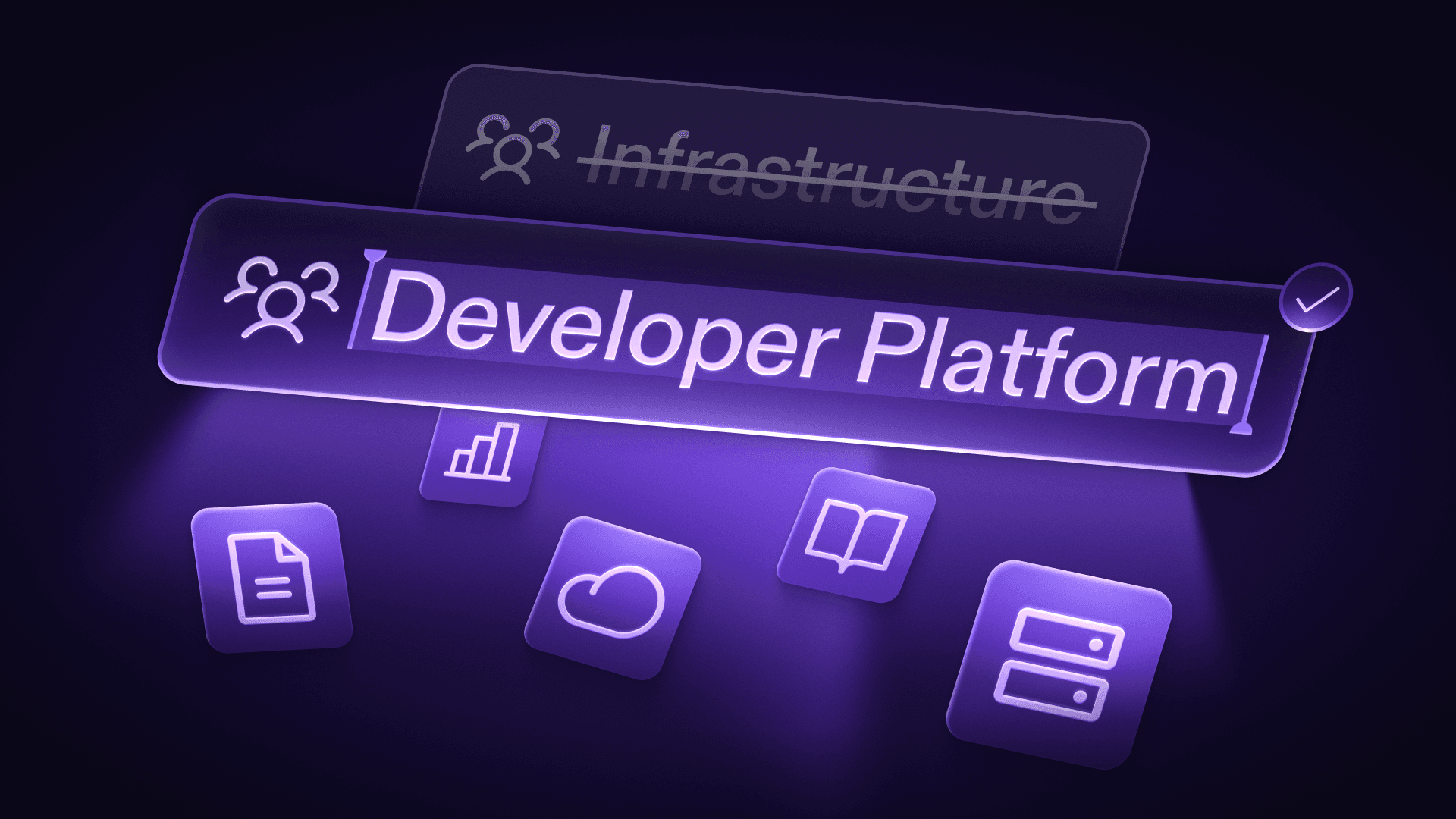
"Build & Release Engineering" becomes "Developer Platform"
"Infrastructure Services" becomes "Engineering Platform"
"DevOps" becomes "Developer Experience"
Each rewrite swaps a verb (what the team does) for a noun (who the team serves, or what outcome the team owns).
Here's a simple test you can run on any name you're considering. If the team's name wouldn't make sense on a slide where you're explaining engineering strategy to your CEO, it's too narrow. "We're investing in the Developer Platform" reads as a strategic bet. "We're investing in Build & Release Engineering" reads as a budget line item. Same team, same work, but it's a different conversation.
Renaming isn't enough, but it's the first move
A rename, by itself, doesn't fix much. It doesn't repair broken incentives, clarify unclear ownership, or solve a charter that's chronically under-funded. If your platform group is fighting a hiring freeze and a hostile peer org, a better label won't move the needle.
What it is, though, is a forcing function. Pair the rename with three concrete moves and it'll stick:
Rewrite the charter so it matches the new name.
Walk the new scope through your peer engineering leads one-on-one, not in a town hall.
Update the team's metrics so they reflect the new mandate.
This pattern shows up at the industry level too. Platform Engineering, SRE, DevEx, DevOps, and Security Engineering are all slices of one operational function that got named separately and are often siloed as a result. The same scope ceiling that boxed the NYT’s Delivery Engineering team out of front-end conversations boxes these disciplines out of each other's work. The fix at industry scale matches the fix at the team level. Pick a name that includes the whole scope, not just the mechanism.
That’s the thinking behind Engineering Operations. Platform Engineering, SRE, DevEx, and DevOps are crucial pieces of an engineering operational function, and they deserve a unified name and mandate. That's why we built Cortex as an Engineering Operations platform.
Check out the EngOps Manifesto or book a demo to learn more.