
Software Engineering is once again being forced to evolve. We are entering the era of infinite code where the cost of writing code tends to zero.
The data tells us that companies are only moving 20% faster than when humans wrote code by hand. We’re writing orders of magnitude more code than ever, yet our processes are barely keeping up with what we had before.
The chaos and complexity is only being amplified by this new shift in how we work as developers.
From this chaos, we believe a new discipline will rise – Engineering Operations.
When the three of us founded Cortex in 2019, we set out to solve the chaos introduced by microservices. An architectural pattern designed for scale and autonomy turned into a human problem – managing spreadsheets and constantly asking “who owns this service again?” We swapped one problem for another.
7 years later, in 2026, it feels like what’s old is new again. Coding agents have made it easier to write code, but have compounded the challenges in every other part of the engineering process.
But let’s be honest – code never really was the main bottleneck. There’s always been a “dark matter” to software engineering, the work that was never really captured but everyone knows made the engine hum. Making sure that we were working on the right things, ensuring our code was truly ready for production, getting hundreds of engineers and thousands of software components aligned on what it takes for a zero-incident peak event under load – those were the types of challenges that differentiated the great engineering teams from the ones crumbling under the chaos.
These are not software problems. These problems are related to how the engineering organization works. How they think about getting 1% better week over week, quarter over quarter. How they make themselves more effective at turning customer needs into working software.
Every function in a company has its “brain” – a group of people solely focused on making their organization incrementally better, over and over again. Think of sales ops – specialists who analyze the data, spot bottlenecks, enable sellers, improve collateral, fine tune processes. No self respecting sales organization runs without a Sales Ops team.
Marketing Ops, IT Ops, Revenue Ops, Product Ops, Finance Ops, the list goes on. All of these teams have a clear mandate:
Provide clarity – make it easier to make decisions
Drive improvement – make the team better at the job
Remove friction – make it easier to do the job
Engineering teams are the center of innovation and largest P&L on the balance sheet, but somehow still run on spreadsheets, tribal knowledge wiki pages, and tapping the developer next to you on the shoulder and asking “who owns the payments service?”
We believe Engineering Operations is the missing link in modern software organizations. EngOps is not new – we’ve iterated toward a smattering of teams that own different slices of it: Platform Engineering, SRE, DevEx, DevOps, and Security Engineering among them. Rather, Engineering Operations is a new mindset – it’s seeing and running all of these teams as part of a single operational function. Not just owning reliability, cloud, deployment, etc in individual silos, but rather executing as a cohesive group of teams that helps engineering get better at serving customers.
In practice, Engineering Operations involves these teams working together to apply an operational excellence lens over the entire SDLC. It means using data and AI to identify and eliminate bottlenecks. It’s about establishing shared definitions of good across the organization, and ensuring that everything from deployment to incident response operates like a well oiled machine. It’s about reducing friction for developers, making it easy to do the right thing, so that builders can focus on building. Done right, EngOps should be like mission control for your engineering org – understanding the data, bringing together the org, and ensuring the collective mission is a success.
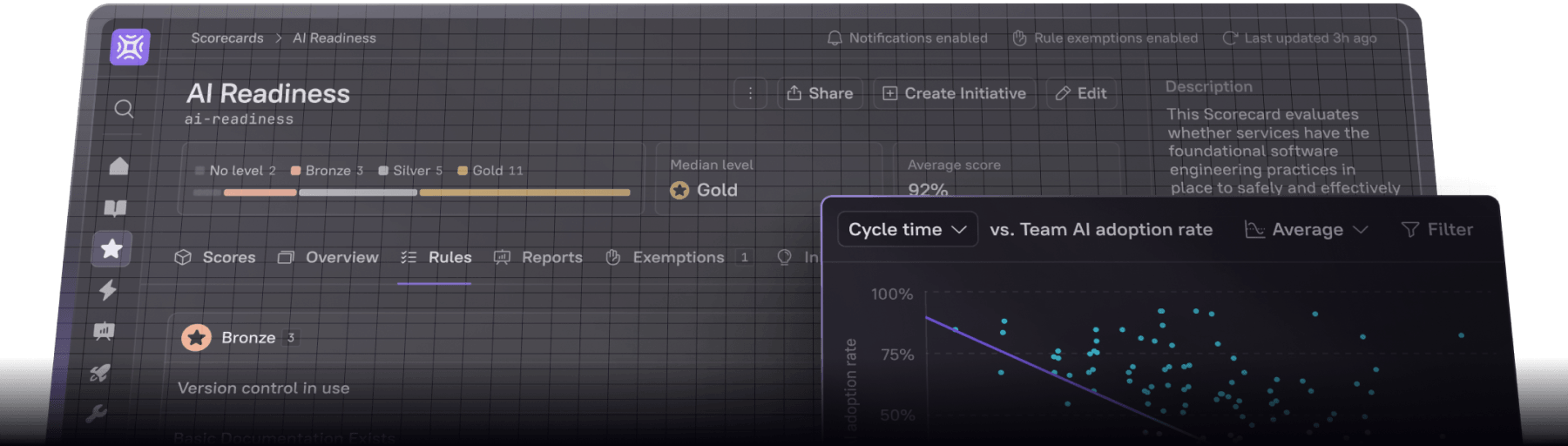
We’ve had a front row seat to how the world’s best organizations are adopting this mindset already. Our most successful customers use Cortex to bring together all of these disparate functions in cohesive service of driving the engineering organization toward Engineering Excellence.
Customers like Etsy, Netflix, H&R Block, Skyscanner, and Xero already use Cortex to drive readiness and reliability initiatives, get ready for the biggest traffic events of the year, reduce friction for their developers, and improve the operational maturity of their organizations.
Cortex is an Engineering Operations Platform serving the entire engineering organization – from CTOs to Developers to SREs to Platform Engineers to TPMs and everyone in between. It’s the platform for organizations that are looking to become better versions of themselves. The way you build is a key factor in the success of what you build.
In 2026, engineering organizations will face a choice. Do you drown under the ever-growing mountain of code written by AI, screeching to a halt as processes fall apart? Or do you build a strong Engineering Operations muscle – where your ability to adapt and continuously improve in an ever changing world turns into your competitive advantage?
It’s time for software engineering to evolve.