Ganesh Datta
HostCTO & Co-founder of Cortex

Nathen Harvey
DORA Lead & Developer Advocate
December 4, 2025

In This Episode
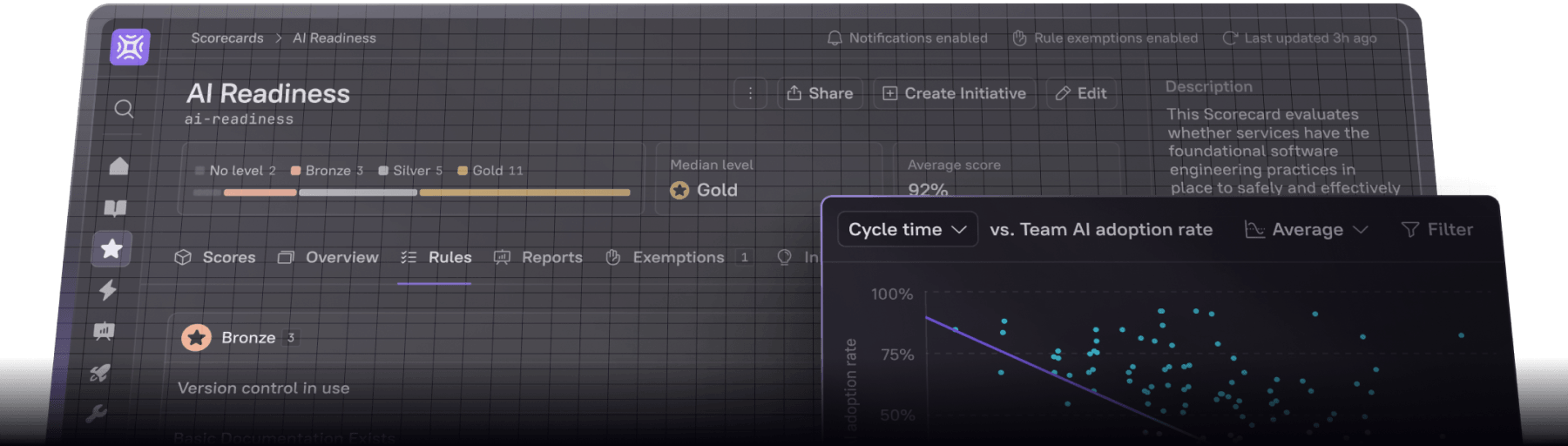
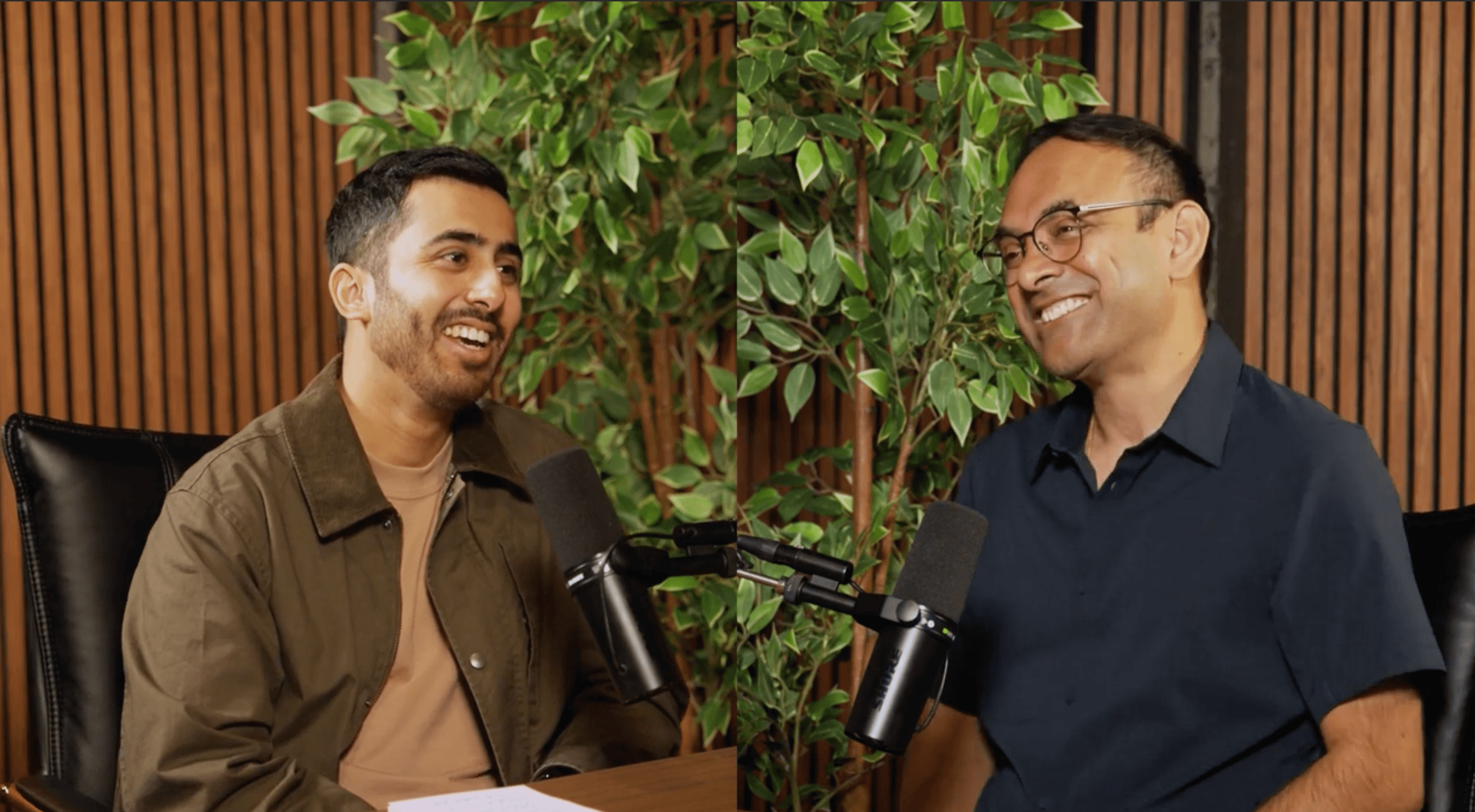
Cortex co-founder and CTO Ganesh Datta sits down with Nathen Harvey, who leads the DORA research program at Google Cloud. They dig into what really drives engineering excellence in the age of AI, why software delivery fundamentals matter more than ever, and why the best teams focus on improvement rather than benchmarks.
Ganesh and Nathen also discuss DORA's latest research into AI adoption, which found that AI acts as an amplifier, accelerates organizations with strong practices, and exposes dysfunction in those without. Nathen shares a few hard-won lessons from value stream mapping exercises that uncover invisible waste, explains why 30% distrust in AI might actually be healthy, and makes a compelling case for using this moment to finally drive the cultural changes teams have always wanted. Ganesh and Nathen also wrestle with the thorny question of what to actually measure when adopting AI tools and why lines of code is the wrong answer.
You’ll learn
DORA's biggest mistake was publishing benchmarks that made leaders obsess over elite performance. What matters more is understanding your context and driving sustainable improvement over time.
If your organization has strong foundational practices, AI will accelerate you. If you have friction and chaos, AI will make those pains more acute.
Working in small batches, strong version control, fast feedback loops, and psychological safety remain critical. AI makes these principles even more valuable.
Every value stream mapping exercise produces a-ha moments: duplicative work, unnecessary steps, and friction that can be eliminated without automation.
If you only have time to map one part of your process, start where code gets committed to the repository and ends when it lands in production.
Tools and culture are inextricably linked. This is the moment to use AI as the reason to finally implement better documentation, more pair programming, and stronger collaboration.
This metric only measures tool usage, nothing more. You wouldn't ask which IDE helps developers write more code, so stop asking it about AI.
Quotes
"We want to help you get better at getting better. This is all about a journey of continuous learning and continuous improvement."
Nathen Harvey
DORA Lead & Developer Advocate

"AI is an amplifier. If you're working in an organization that has those foundational principles and practices in place, AI is going to amplify that and help you accelerate even more. On the other hand, if you're working in an environment that's very disconnected, there's a lot of friction and chaos within your organization, introducing AI is probably going to make the pains of that chaos more acute."
Nathen Harvey
DORA Lead & Developer Advocate
"Some of the things we've learned over time are durable. They're foundational principles for a reason, and those are things we should be investing in at least as much, if not more, now that we have AI. The biggest visible impact from AI is you can generate a whole lot more code in much less time. So how are you going to manage all of that change? You go back to those foundational principles that we've been talking about and improving over the past decades with software engineering."
Nathen Harvey
DORA Lead & Developer Advocate
"Every time I run a value stream mapping exercise with a team, 100% of the time there are crazy a-ha moments. There's friction that's identified, duplicative work that's identified. There are steps happening in that process that simply don't need to happen. We don't even need to think about automating them—we can just get rid of those steps. They're not adding any value. They're not helping us in any way. Having a to-stop list is way better than a to-do list."
Nathen Harvey
DORA Lead & Developer Advocate
"Agree on what I call the consequences of overspending your error budget in advance—in a time where it's not 'oh my gosh, everything has gone terrible, we've got to fix this right now.' We have to agree on what we're going to do when we violate those SLOs and how we're going to respond. Come up with a pact, an agreement. And then when we do overextend our SLOs or miss those SLOs—and let's be clear, we will miss our SLOs, that's just part of how work happens—we agree that we're going to hold steadfast to that pact, to that agreement of how we're going to change in order to recover that SLO that we lost."
Nathen Harvey
DORA Lead & Developer Advocate
"It helps you level set the right level of reliability. An SLO doesn't say a hundred percent available, a hundred percent fast all the time. We use SLOs to figure out what's the acceptable level of reliability that keeps a customer—a typical customer—happy enough that they keep coming back and keep using the service. That's very different than striving for five nines across every measure that you have."
Nathen Harvey
DORA Lead & Developer Advocate
"About 30% of our survey respondents said they have little or no trust in AI. I think 30% is probably a healthy number. You shouldn't expect to take whatever the AI gives you and ship it, whether that's code or an email you want to send to your boss or to a customer. We should verify. We should have good feedback mechanisms in place to validate that this is what we actually want to ship. So I think that's healthy."
Nathen Harvey
DORA Lead & Developer Advocate
"It's intentionality. We've got to be intentional about it, and that intentionality can be across a wide spectrum. Some of that intentionality could be, 'We just want to go and learn. We want to create an environment where it's safe to experiment, safe to learn, and as you learn things, it's easy to share those lessons across the organization.' That's one really great way to approach it. I would lean less towards trying to control and more towards allowing for experimentation, because I think that's what's going to give you the best results."
Nathen Harvey
DORA Lead & Developer Advocate
"Tools and culture are inextricably linked. They reinforce and amplify one another, and so this is an opportunity for all of us to say, 'Hey, there are practices or ways of working that we've always wanted and we've struggled with. Let's use AI as the excuse for why we have to go start doing those things.' Use AI as the reason why we have to collaborate more. Use AI as the reason why we do more pair programming or more test-first programming. Use AI as the reason why we do better documentation. All of these things are going to pay off and help change the culture of your organization, hopefully for the better."
Nathen Harvey
DORA Lead & Developer Advocate
"A lot of senior engineers are starting to go down the agentic path and are writing Claude MD files or Gemini MD files that explicitly state 'this is my way of working.' I find it ironic that these senior engineers would never write it down for a junior engineer so they could learn, but they will write it down for a bot so the bot gives them better outputs. The side effect is they've written it down and now junior engineers can take advantage of that knowledge. We've made that knowledge much more explicit for everyone in the organization, including the AI robots that are writing code for us."
Nathen Harvey
DORA Lead & Developer Advocate
"Create communities of practice, not centers of excellence. You want to create a place where information and ideas can flow organically throughout your organization. A center of excellence oftentimes becomes a group that sits up on a high tower and is disconnected from the work. So don't do that. Create the communities of practice that allow that knowledge to spread throughout the organization."
Nathen Harvey
DORA Lead & Developer Advocate
"Please stop measuring lines of code accepted or lines of code generated by AI—or at least understand that all that's measuring is usage of the tool. It measures nothing beyond that. As you introduced a new IDE to your team, did you ask which of your IDEs allows developers to write more code? Is it Visual Studio Code? Is it IntelliJ? Or is it Vim? Which one of these developers is the most productive? We never ask that question. Stop asking it about AI."
Nathen Harvey
DORA Lead & Developer Advocate
"You should be focused on being a better version of your own team, your own organization. There's a hierarchy of benchmarking—as a team, thinking about yourself and your previous state and seeing if your team is better. If you're a VP or CTO, then maybe those industry benchmarks are useful as a 'Hey, what should I be thinking about?' Not so much 'Oh, my org sucks and that team's great.' It's more 'Where could we be? Where can we try and improve?'"
Ganesh Datta
CTO & Co-founder of Cortex

"One of the conversations I had recently was, 'Oh, we're expecting our product owners to do a better job of writing out the specifications and the expected behaviors upfront, because that allows coding assistants to do a better job of implementing them.' I'm thinking, 'Okay, well actually you've changed your culture because you're forcing, again, more intentionality about what is the change and what is the behavior and what should it do and how should it impact our customers.' Naturally you'll lead to better outcomes."
Ganesh Datta
CTO & Co-founder of Cortex
Timestamps
0:00
Introduction to DORA
5:06
AI as an Amplifier - 2025 DORA Report Insights
14:21
Value Stream Mapping and Finding Bottlenecks
22:34
SLOs, Error Budgets, and Customer-Centric Reliability
26:20
The Trust Paradox and AI Adoption Patterns
35:03
Using AI to Drive Cultural Change
39:46
Hot Take: Stop Measuring Lines of Code
Other episodes
 October 8, 2026
Signadot's Arjun Iyer on closing the validation loop for coding agents
Arjun Iyer
CEO and Co-Founder
 September 10, 2026
Outcomes over activities: Planera's Naveen Puvvula on aligning humans and agents to the work that matters
Naveen Puvvula
Senior Principal Engineer at Planera

 September 8, 2026
Attacker expertise just got commoditized: Semgrep's Adam Berman on security in the agent era
Adam Berman
Engineering Leader