
Incident response is a context problem. The first minutes of any incident are spent reconstructing what the affected service is, what it depends on, and who owns it. That reconstruction happens during the worst possible window.
The Cortex catalog already holds this data: services, teams, domains, and the relationships between them, maintained by the engineers who run those systems. With this update, that catalog now flows directly into Rootly, so responders work from the same live picture your engineering org already trusts.
What's new
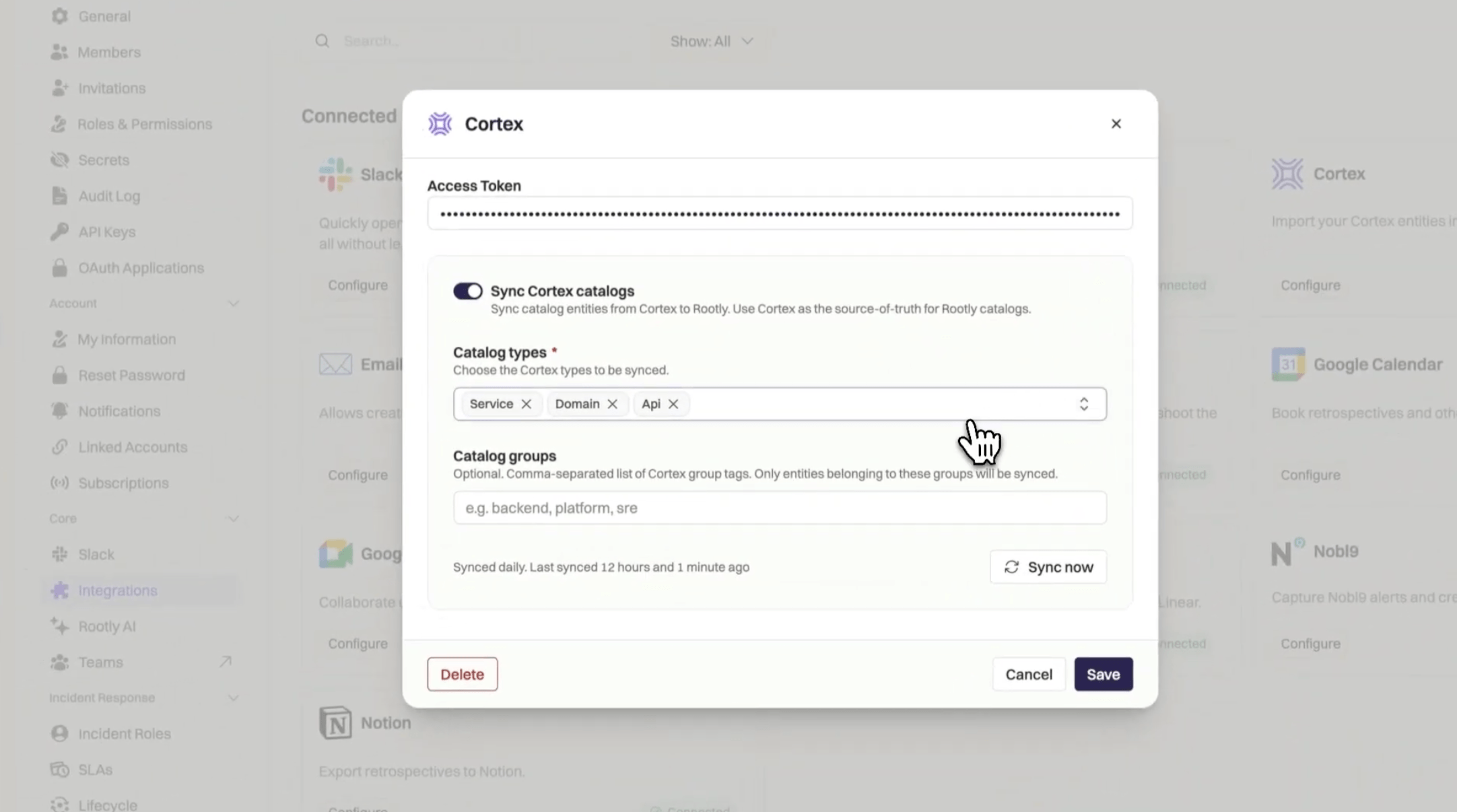
Self-serve setup from Rootly's integrations page using a single Cortex access token.
Choose which Cortex entity types to sync. Services, teams, domains, APIs, and other entity types you've modeled in Cortex. You can also filter to entities in a specific group.
Map into your existing Rootly catalogs by name. If you already have a Services catalog in Rootly, your Cortex services flow into it instead of creating a duplicate. New entity types create new catalogs automatically.
Cortex-owned properties stay read-only in Rootly, which prevents the two systems from drifting. Your Rootly-only fields, like a Jira board ID, stay editable on top of the synced data.
Automatic sync every 24 hours, with on-demand sync when you need an update before the next refresh.
How it works
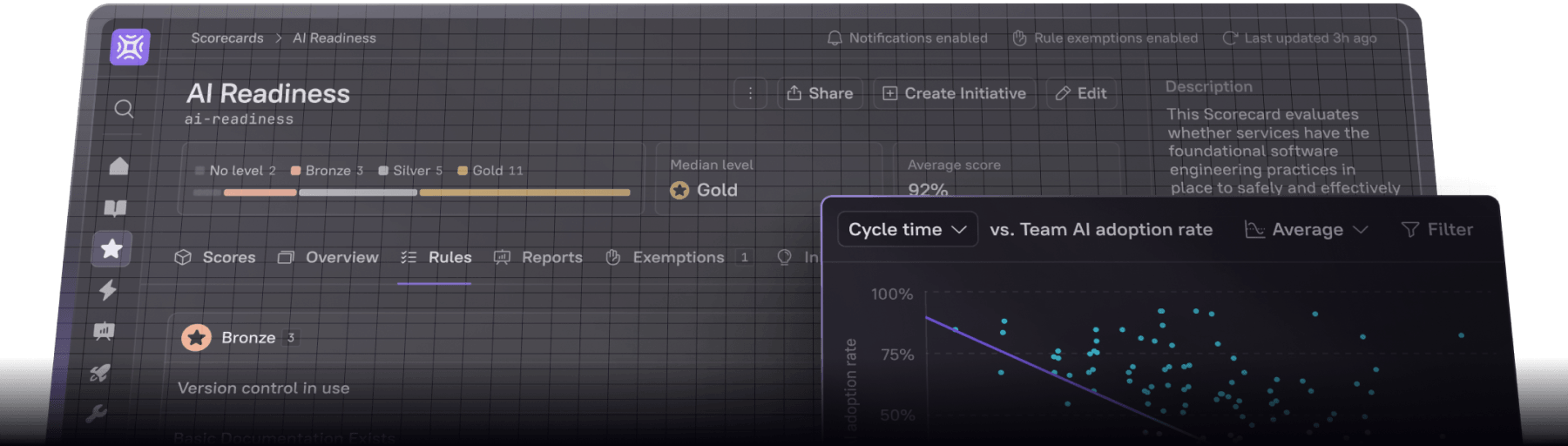
From Cortex, you can see active Rootly incidents and 30-day history on any entity connected to a Rootly service, trigger incidents from an entity page, and build Scorecards and CQL queries on incident data as part of your operational maturity work.
From Rootly, responders now work directly from your live Cortex catalog, with services, teams, and ownership kept current automatically.
Cortex stays the source of truth for how your engineering org is structured. Rootly stays the source of truth for what's broken right now. Both stay in sync.
Why it matters
With a bidirectional sync, the catalog and incident data sit on the same foundation. A Sev0 count is just a number until it's tied to a service, an owning team, and the standards that team is accountable to. The integration ties them automatically.
Getting started
If you're already running both tools, head to Rootly's integrations page, generate a Cortex access token, and turn on the new catalog sync. For setup details, see Rootly's documentation. For the Cortex side of the integration, see our docs.
If you're new to Cortex, request a demo to see what changes when your service catalog is the spine for everything from production readiness to incident response.