Ganesh Datta
HostCTO & Co-founder of Cortex

Dinesh Sukhija
Director of Engineering
June 4, 2026

In This Episode
Dinesh Sukhija is a Director of Engineering at Okta, where he leads SRE, security infrastructure, and enterprise security tooling in the cyber defense org. Before Okta, he ran infrastructure and developer experience at Opendoor, where he was an early Cortex customer and helped build the DevEx practice.
In this episode of Braintrust, Dinesh joins Cortex CTO Ganesh Datta to talk about how platform engineering, SRE, and security are changing under AI: why golden paths still matter, why standardization is now an agent problem as much as a human one, and why the three functions may soon belong under one leader.
You’ll learn
Build the platform like a product, or it becomes a vanity project. Platform leaders need the same discipline a product team brings: interviews, pairing with engineers, validating real blockers, and being intentional about what makes the roadmap.
Golden paths haven't gone away under AI. They've moved up the stack. Paved paths used to mean scaffolders and one-click deploys. Now they're guardrails on model choice, token usage, AI gateways, and what agent-generated code is allowed to ship.
Standardization helps agents reason about your systems, not just humans. Consistent observability layouts and service patterns reduce cognitive load during incidents. They also let you fine-tune internal AI skills instead of paying the model to re-derive context on every request. Limiting sprawl today is a credible path to self-hosted micro-models tomorrow.
The only way to keep up with AI-generated code is to meet AI with AI. On the security side, that means AI SOC, agentic detection and response, and DSPM extended to AI workloads. SRE is shifting the same way, from advisory guidance to a non-negotiable back pressure on what reaches production.
Platform, SRE, and security may belong under one leader, especially at smaller orgs. As complexity shifts from algorithms to the surrounding software stack, the boundaries between these functions blur. Engineering organizations with fewer than 500 engineers may benefit from a single technical leader who can make reliability, security, and delivery trade-offs in one room.
Quotes
It is really important to build something that will be used by somebody. And that's the product mindset: interviews, pairing with engineers, validating problems across teams, being intentional about what's on your DevX roadmap.
Dinesh Sukhija
Director of Engineering

Where the paved path used to be scaffolders and single-click deployment options on a portal, they're shifting more towards, ‘How do you guardrail AI-shipped code and what does the paved path look like for that'?
Dinesh Sukhija
Director of Engineering
How do you improve your product security capabilities, your cyber defense capabilities, your detection capabilities, and at the same time not slowing down product teams? You meet AI with AI.
Dinesh Sukhija
Director of Engineering
Say yes to hard things. Do the hard things, because that's the only way you can grow.
Dinesh Sukhija
Director of Engineering
Timestamps
(01:34)
Dinesh's background and the shift from ops teams to platform teams.
(04:48)
Why platforms exist: productivity, business continuity, and developer happiness as a byproduct.
(07:47)
Building a platform like a product through interviews, validation, and roadmap discipline.
(11:23)
Why golden paths still matter in the AI era and how they've moved up the stack.
(13:21)
Standardization as a benefit for humans during incidents and for agents reasoning about systems.
(19:09)
Meeting AI with AI: AI SOC, AISRE, DSPM, and AppSec in an agentic world.
(24:52)
How SRE is evolving from advisory function to non-negotiable back pressure.
(29:50)
Whether platform, SRE, and security should sit under a single leader.
(31:19)
Career advice: saying yes to hard things across a wide-spectrum career.
(32:38)
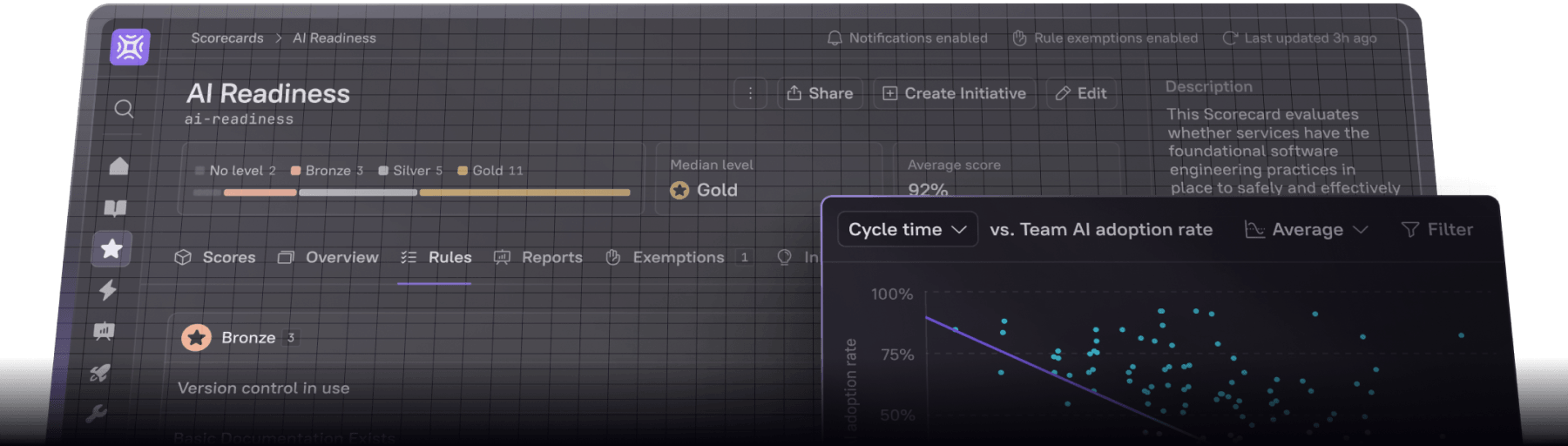
Advice for leaders building a security / platform / SRE team for the first time: measurable outcomes and scorecards.
Other episodes
 October 8, 2026
Signadot's Arjun Iyer on closing the validation loop for coding agents
Arjun Iyer
CEO and Co-Founder

 September 10, 2026
Outcomes over activities: Planera's Naveen Puvvula on aligning humans and agents to the work that matters
Naveen Puvvula
Senior Principal Engineer at Planera

 September 8, 2026
Attacker expertise just got commoditized: Semgrep's Adam Berman on security in the agent era
Adam Berman
Engineering Leader