Ganesh Datta
HostCTO & Co-founder of Cortex

Ganesan Solaiappan
Systems Engineering Senior Advisor II
November 19, 2026

In This Episode
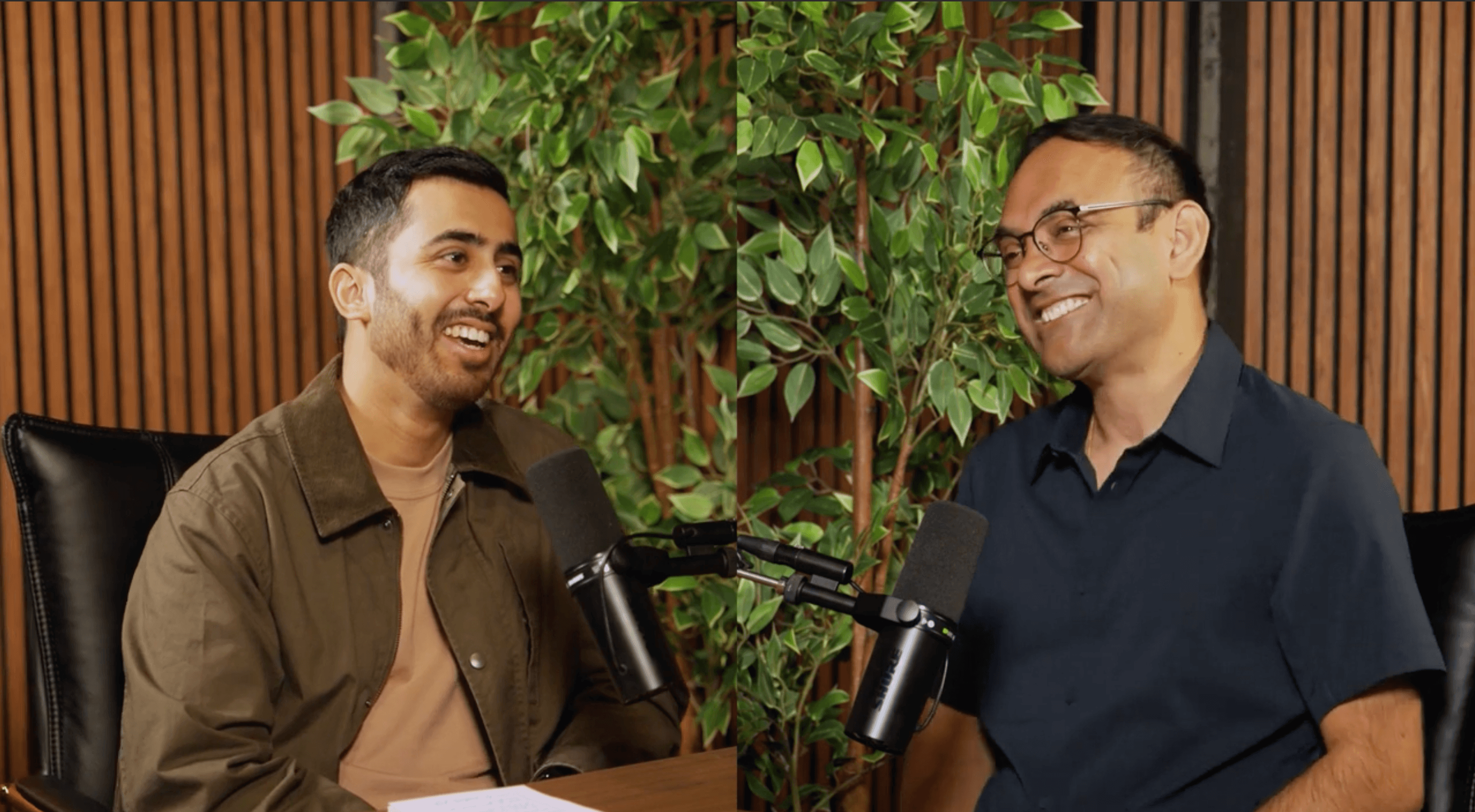
Ganesan Solaiappan is a Systems Engineering Senior Advisor II at Fiserv, a global leader in payments and financial technology. He's been at Fiserv for four years and works in Fiserv Technology Services (FTS), the group that owns developer experience across the company, where he focuses on AI enablement for CI/CD, DevSecOps, and day-to-day development on every stack Fiserv runs. Fiserv grew through acquisitions that keep their own ways of working, so much of his job is serving very different teams without forcing them onto one track.
Ganesan joins Cortex CTO Ganesh Datta to make the case for quality code over quick code as coding agents spread through a regulated enterprise. They get into why standardization "should not be a punishment," a Devin automation that fixes SonarQube findings on every commit, and why more PRs still means more cost. Ganesan reads the OpenAI and Hugging Face breach as a warning for anyone building golden paths: confine something, and it tends to break out.
You’ll learn
Standards at Fiserv start with what already works. Ganesan's team builds guardrails that make the wrong thing hard to do, then nudges teams at different maturity levels instead of penalizing them.
The best platform team is “invisible like air”. Ganesan's team built self-service tools so developers can solve CI/CD issues on their own instead of handing them off.
Agents that fix code need the repo's context first. In a pilot that included Fiserv's MCP integration with Cortex, Ganesan's team has Devin map the whole repo before it fixes anything, so its fixes don't introduce new problems or disturb the architecture.
Why spend on quality when code is cheap? Because the next agent inherits it. A few extra minutes on quality gives the next agent, or a better future model, a codebase it can build on. A bug that reaches customers costs far more than one caught in dev, QA, or UAT.
A higher PR count is still a cost. Ganesan counts engineering output as cost until a feature merges, ships, and brings in revenue a customer pays for. By that measure, a team celebrating a PR spike after rolling out coding agents hasn't left the gate.
If security requirements slow the rollout, keep them. Ganesan treats every security blocker as a question to answer, and when a breach makes the news, his team reproduces it locally to prove Fiserv is covered.
Quotes
Standardization should not be a punishment. It should inspire teams to say, 'That is a good value.
Ganesan Solaiappan
Systems Engineering Senior Advisor II

If [the platform team doesn't] have to be there, we don't need to be there. As my manager puts it, we should be invisible like air, and when teams need us, we give them the oxygen.
Ganesan Solaiappan
Systems Engineering Senior Advisor II
I don't need quick code, I need quality code. The only way we get quality code is for the agents to recognize what the application is about. They need to understand the context more than they need to emit code.
Ganesan Solaiappan
Systems Engineering Senior Advisor II
An increase in PRs doesn't mean you're releasing software. It means you're still in the cost center. You haven't even moved from the gate.
Ganesan Solaiappan
Systems Engineering Senior Advisor II
Do not relax your security requirements. Keep those blockers there, keep all those obstacles there, because those obstacles are protecting you.
Ganesan Solaiappan
Systems Engineering Senior Advisor II
Never think that roadblocks are there to stop you. You just need to prove to them that it's safe.
Ganesan Solaiappan
Systems Engineering Senior Advisor II
Timestamps
(01:58)
Fiserv's acquisition-built landscape and AI enablement from mainframes to modern stacks.
(03:53)
Can you standardize across acquired orgs? Why it shouldn't feel like a punishment.
(07:12)
Carrot or stick? Self-serve CI/CD support through an LLM-backed Teams channel.
(08:38)
Coder workspaces that mirror the pipeline, and being "invisible like air."
(09:48)
Golden paths, and what the OpenAI and Hugging Face incident says about confinement.
(11:05)
Coding agents and code quality: quality gates, SonarQube, and tech debt.
(12:59)
A Devin automation that fixes SonarQube issues on every commit.
(14:51)
Blind leading the blind? Giving agents the repo's context before they fix anything.
(16:42)
Why code quality matters when code is cheap to generate.
(19:55)
The cost of a bug, from dev to customer.
(21:04)
Unit tests and autonomous agents working in the background.
(22:49)
Has AI changed how tech debt gets prioritized?
(24:37)
Measuring AI ROI by revenue, and why a PR is still a cost.
(27:20)
Advice for regulated enterprises: keep your security blockers.
(29:07)
Reproducing public incidents locally to prove it's safe.
Other episodes
 October 8, 2026
Signadot's Arjun Iyer on closing the validation loop for coding agents
Arjun Iyer
CEO and Co-Founder

 September 10, 2026
Outcomes over activities: Planera's Naveen Puvvula on aligning humans and agents to the work that matters
Naveen Puvvula
Senior Principal Engineer at Planera

 September 8, 2026
Attacker expertise just got commoditized: Semgrep's Adam Berman on security in the agent era
Adam Berman
Engineering Leader